
The Homewood: 1930s modernism, with a twist
The Homewood (1937-1938), designed by the British architect Patrick Gwynne, is one of the best surviving examples of inter-war modernist domestic architecture in Britain.
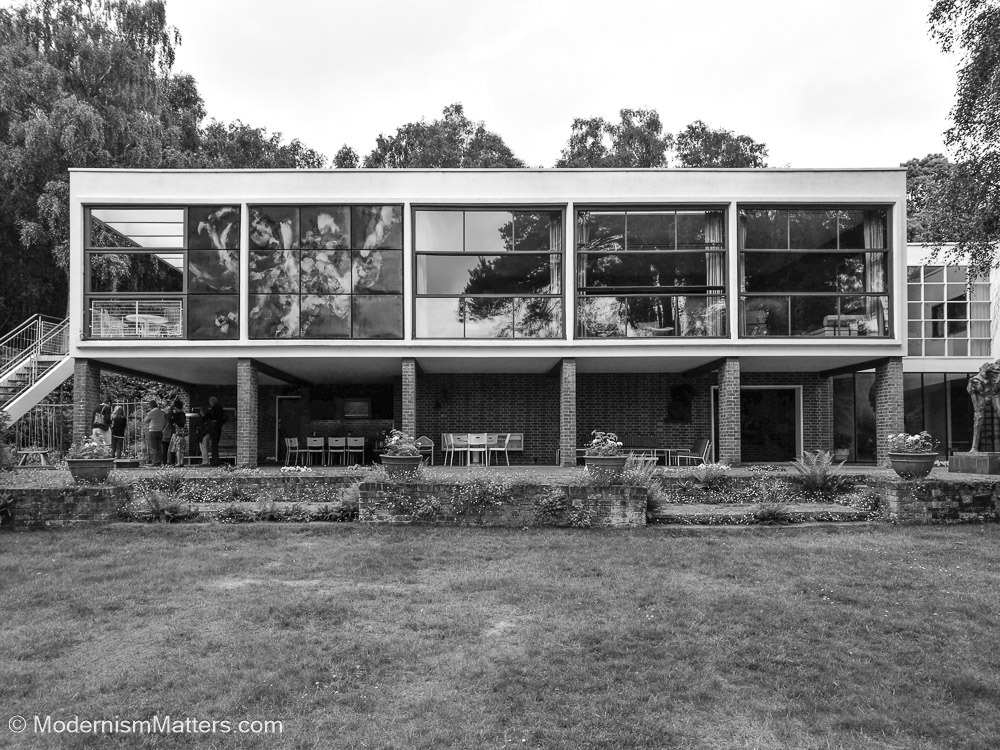
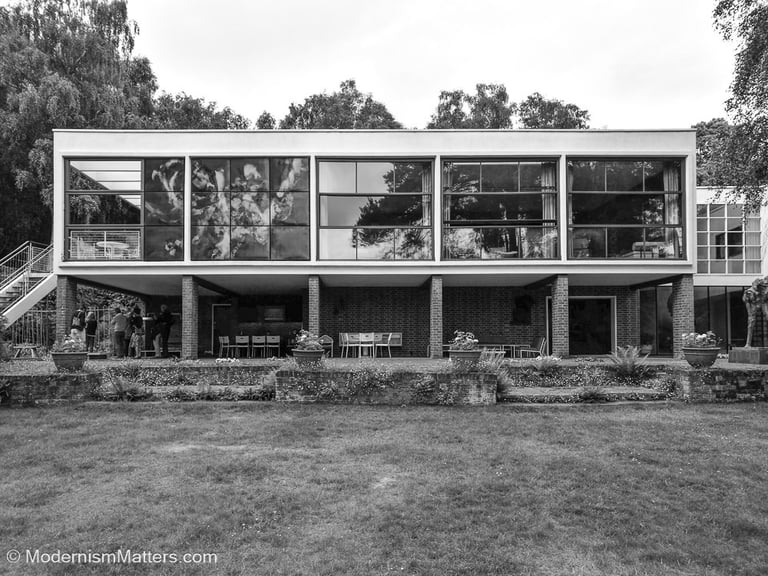
Gwynne spent his formative years under the tutelage of Wells Coates – an architect best known for the Isokon Building in Hampstead, London – and worked on Coates’ then strikingly modern dwelling, ‘Shipwrights’, in Benfleet, Essex (1936-1937). On leaving Coates’ office, The Homewood became Gwynne’s first solo project, a replacement for his family’s Victorian home on an expansive woodland plot near Esher, Surrey. The Homewood is a two-storey villa very much in the stylistic mould of 'Shipwrights', but also takes its aesthetic cues from Le Corbusier’s earlier, and hugely influential, Villa Savoye in Poissy, France (1928-1931). However, whilst sharing many of those building’s modernist design traits – rectilinear form, white rendered walls, ribbon glazing, flat roof, and support piers (‘piloti’) that elevate the building to create covered space at ground level – it is no Corbusian clone white box. Indeed, The Homewood incorporated English traditionalism and decorative gestures that moved its design beyond pure modernist functionalism. It is a substantial property that, in the tradition of an English country house, made a clear division between the living space (which
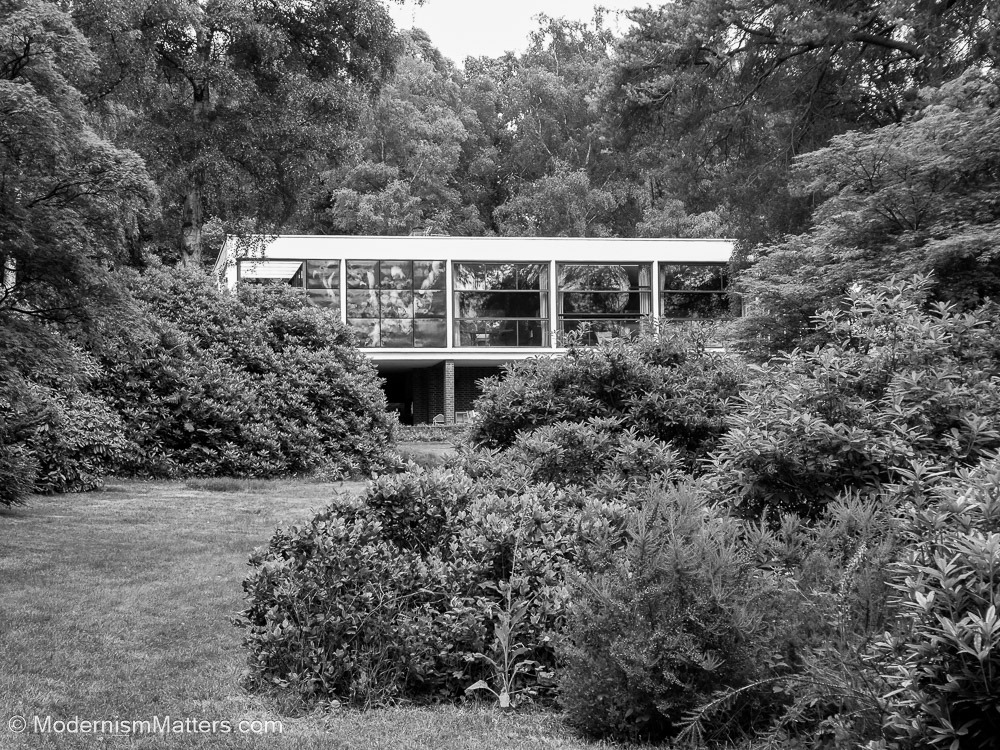
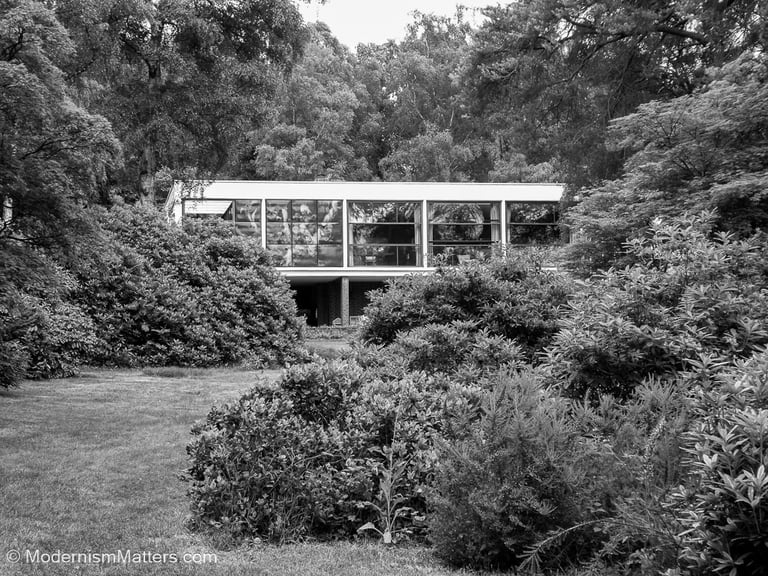
adjoined the service areas and former staff quarters), and the bedrooms, with these separated across two wings. As in any grand country residence, the building’s (spiral) staircase is a central architectural feature, lavishly finished in terrazzo; an ornate chandelier – one of the building’s most elaborate decorative features – hangs above the stairwell. The Homewood also incorporates a folding partition, embellished with gold leaf botanical motifs, dividing the living and dining rooms, and a Levanto marble wall and fireplace, that conjure the Art Deco lavishness of the Chrysler Building’s lobby rather than the stripped-back neutral minimalism of Villa Savoye’s interior. The house also harmonises with its surroundings, nestling into the landscaping of its garden setting, rather than appearing to rise from it, as the Villa Savoye does from its bare, manicured lawn.
The importance of The Homewood has been recognised through its Grade II listing in 1971, signifying a building of “special interest”, with many of its defining modernist features cited in the listing. It is also one of only two twentieth century modernist houses to feature in the collection of the National Trust, the other being Erno Goldfinger’s 2 Willow Road in Hampstead, London (1937-1939). The Homewood is a building of distinction, with a design aesthetic that embodies 'International Style' modernism (combined with a country house sensibility), and an interior rich with surprising decorative flourishes.
Sources:
Bingham, N. (2004). The Homewood Guidebook. London: National Trust.
Copyright ©2026 ModernismMatters.com. All Rights Reserved.