
Note-worthy modernist architecture: Cardiff University School of Music
Cardiff University’s School of Music (1970-1971) is one of the standout modernist buildings in the city’s Cathays Park area – a locale with an abundance of striking twentieth century civic architecture.
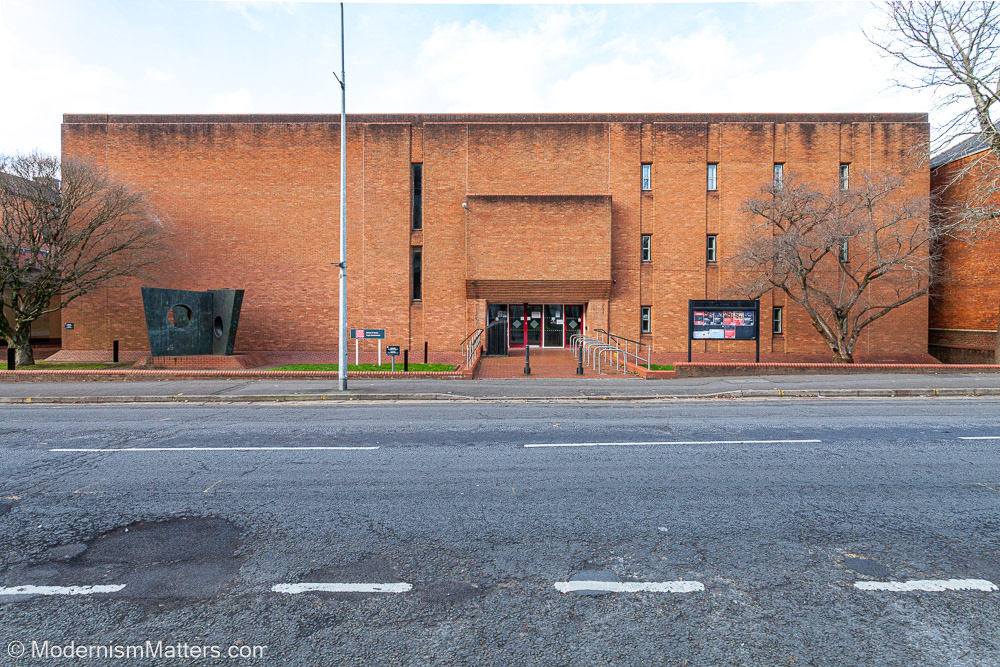
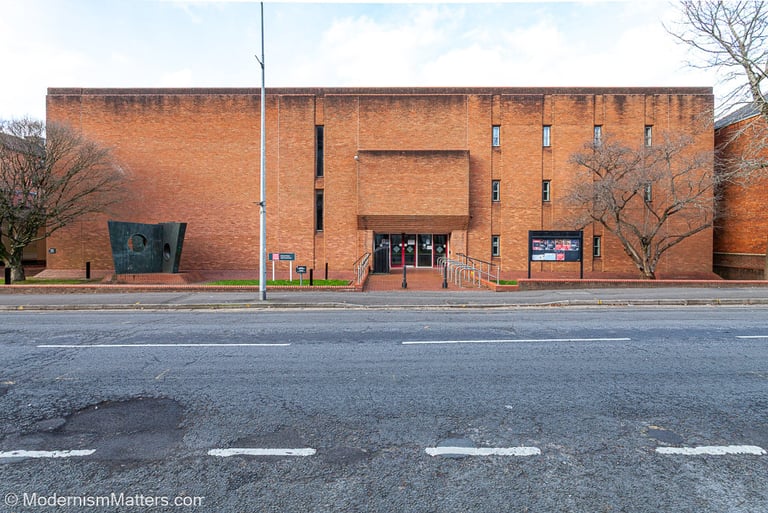
Designed by Alex Gordon and Partners, the School of Music building is located on the northernmost fringe of the park. Gordon and Partners was, alongside Percy Thomas and Son, one of the most prominent and prolific architectural practices of the post-war era in Wales, with numerous commissions in Cardiff in the 1970s. Typical of these is Gordon’s School of Music building, a monolithic red-brick structure whose solid massing and spartan exterior suggest a brutalist pedigree, though its expansive brickwork and slit windows are also reminiscent of Willem Dudok’s iconic, early modernist Hilversum Town Hall in the Netherlands (1928-1931).
The acoustical needs of a building dedicated to the study and performance of music – the School of Music houses various practice suites and studios alongside a small concert hall – likely dictated its minimal apertures and functional mien.
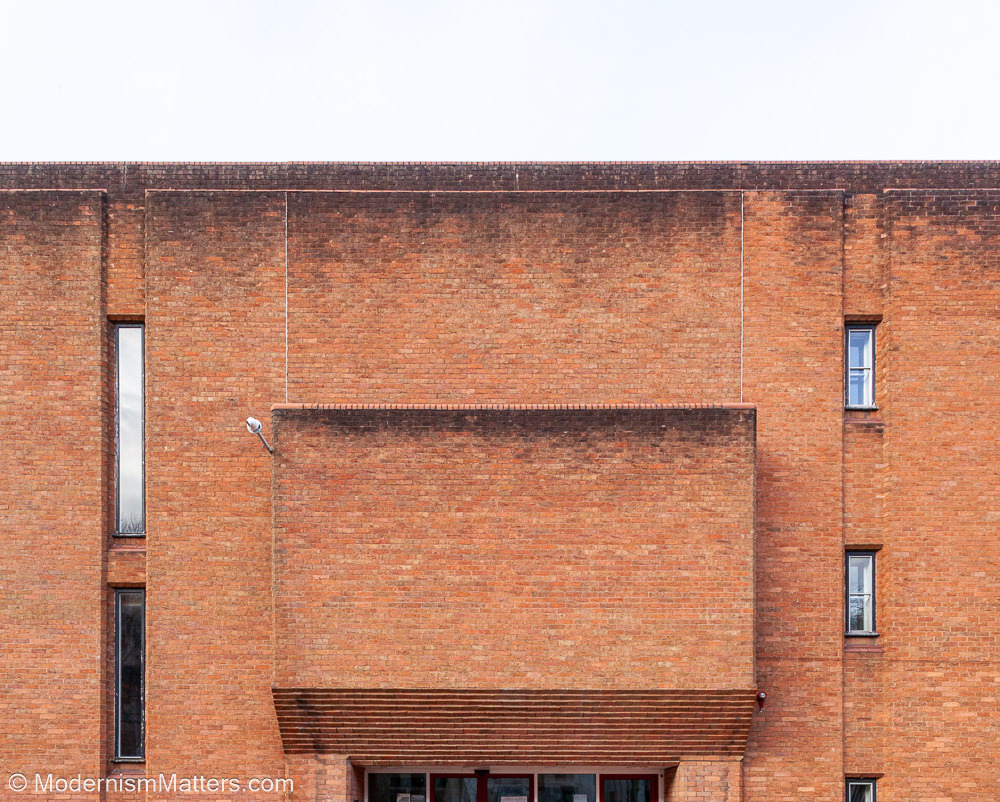
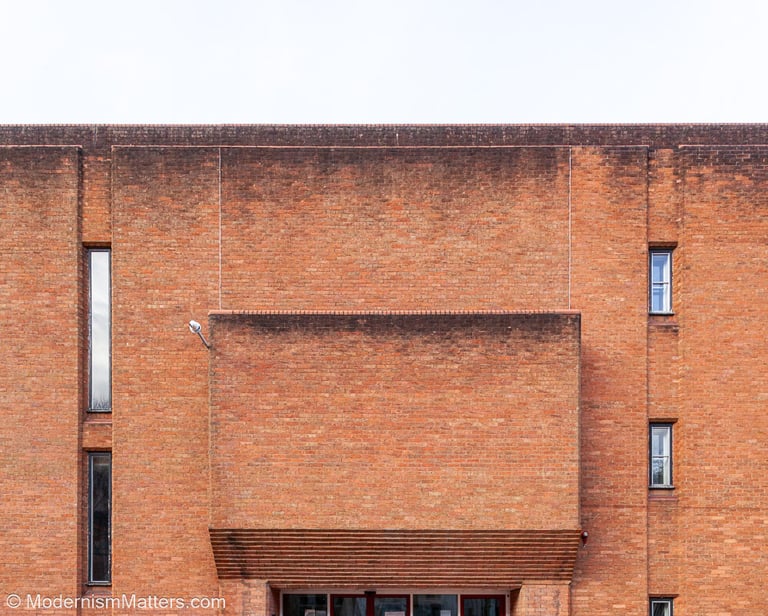
However, the building also possesses a simple but refined sculptural quality, typified by the inverted brick canopy that cantilevers neatly over the School of Music’s discrete entrance (see photo). A further sculptural touch is offered by Barbara Hepworth’s 1969 bronze, Three Obliques, which sits on a small patch of lawn in front of the windowless left flank of the building’s main façade.
The School of Music building’s terracotta hues and sensitive scaling also do much to blend with the neighbouring red-brick, Gothic Revival, Aberdare Hall – one of Cardiff University’s most elegant student residences. Both buildings are dwarfed by the Crown Building II (1972-1979), located directly opposite on Corbett Road – a hulkingly impressive five-storey brutalist office complex, also designed by Gordon and Partners, that is currently home to the Welsh Government. The Crown II building’s stepped façade and geometric monumentality has echoes of American mid-century civic Brutalism, most notably Boston’s City Hall (by Kallmann, McKinnell & Knowles, 1963-1968).
Other notable buildings in Cardiff by Gordon and Partners include the Grade II listed Cyncoed Methodist Church (1965-1966) and Cardiff University Students’ Union (1970-1973), amongst others. Further afield in South Wales, Gordon’s imposing Crown Court building in Swansea (1985-1988) has predominantly neo-classical stylistic influences, albeit blended with a brutalist heft.
Copyright ©2026 ModernismMatters.com. All Rights Reserved.