
The brutal beauty of Clifton Cathedral
Clifton Cathedral – or to give it its full name, the Roman Catholic Cathedral Church of Saints Peter and Paul – is located in the historic Bristol suburb of Clifton. It was constructed between 1970 and 1973 to a design by Ronald Weeks of the Percy Thomas Partnership, and was Grade II* listed in 2000.
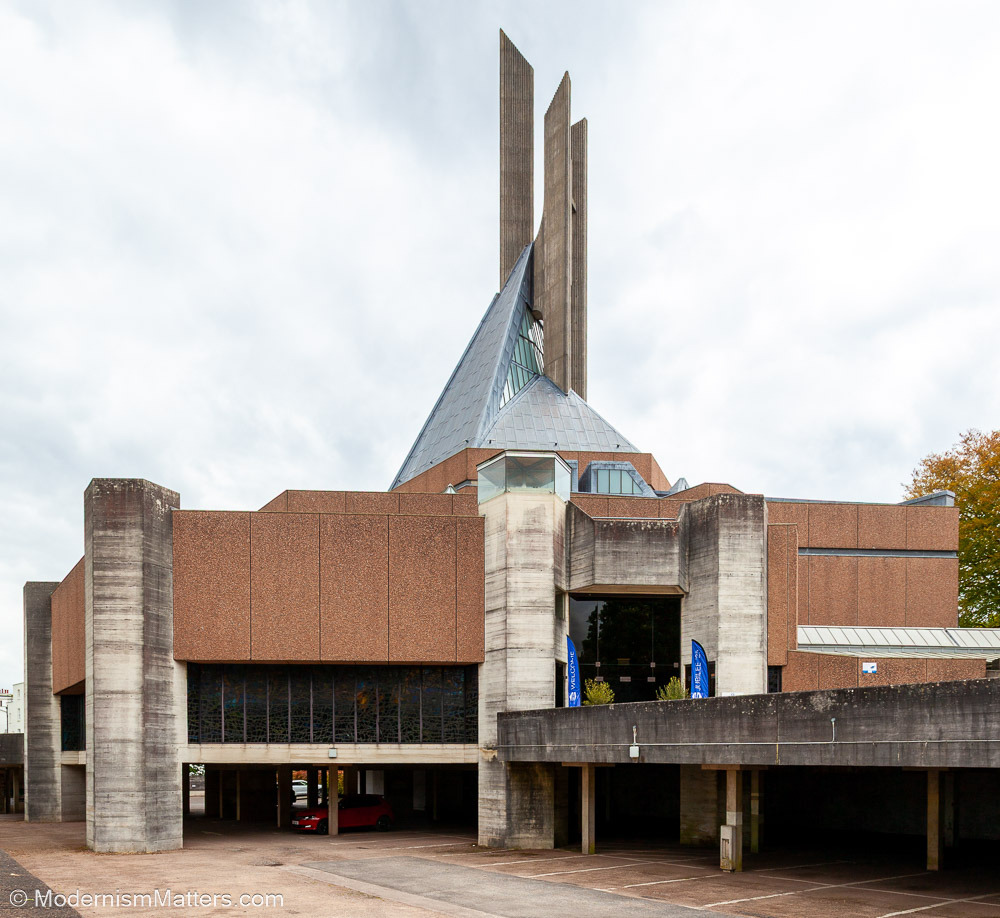
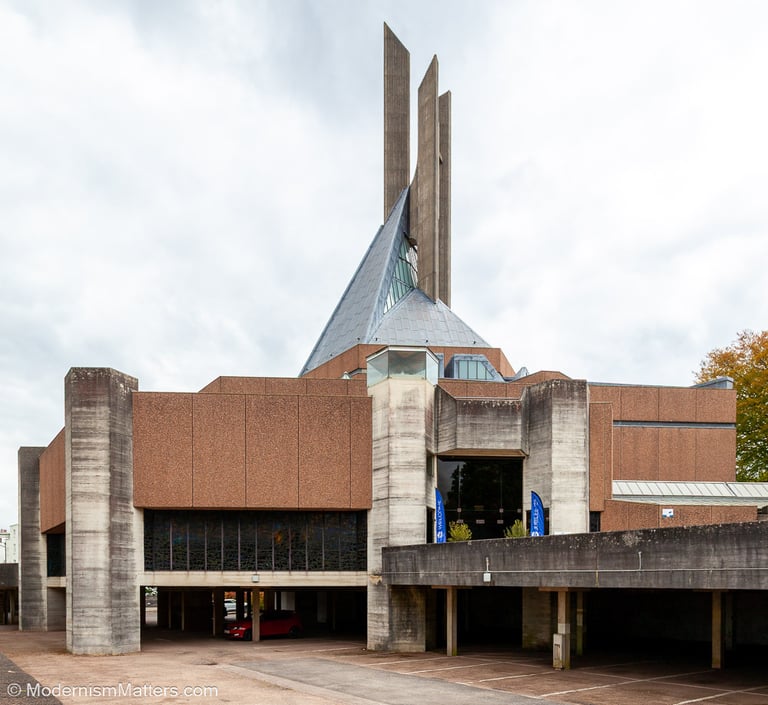
Often the first glimpse many get of the cathedral is of its landmark spire, formed of a triad of interlinked concrete shards, which offers an intriguing contrast to the surrounding landscape of Georgian terraces and Victorian villas that Clifton is known for. In full view, the cathedral’s upper section has a striking, almost teepee-like form. Its steeply-pitched lead-covered roof rises from lower exterior walls clad in distinctive panels of red Aberdeen Granite aggregate, which are set alongside chunky hexagonal support piers of raw, board-marked concrete. It is quite the spectacle.
However, it is on the inside where the architecture fully springs to life. The building's attractive pale concrete walls, protected from the weathering that has stained the exterior concrete, have a luminous quality. Structurally, the interior is exhilarating – a medley of criss-crossing sculptural concrete sections and geometric shapes. The cathedral's irregular hexagonal layout, palpable from the outside, is more pronounced internally, and hexagonal cutouts punctuate the interior star beam suspended above the sanctuary. Repeated triangular voids are made by the intersecting concrete beams forming part of the lower ceiling.
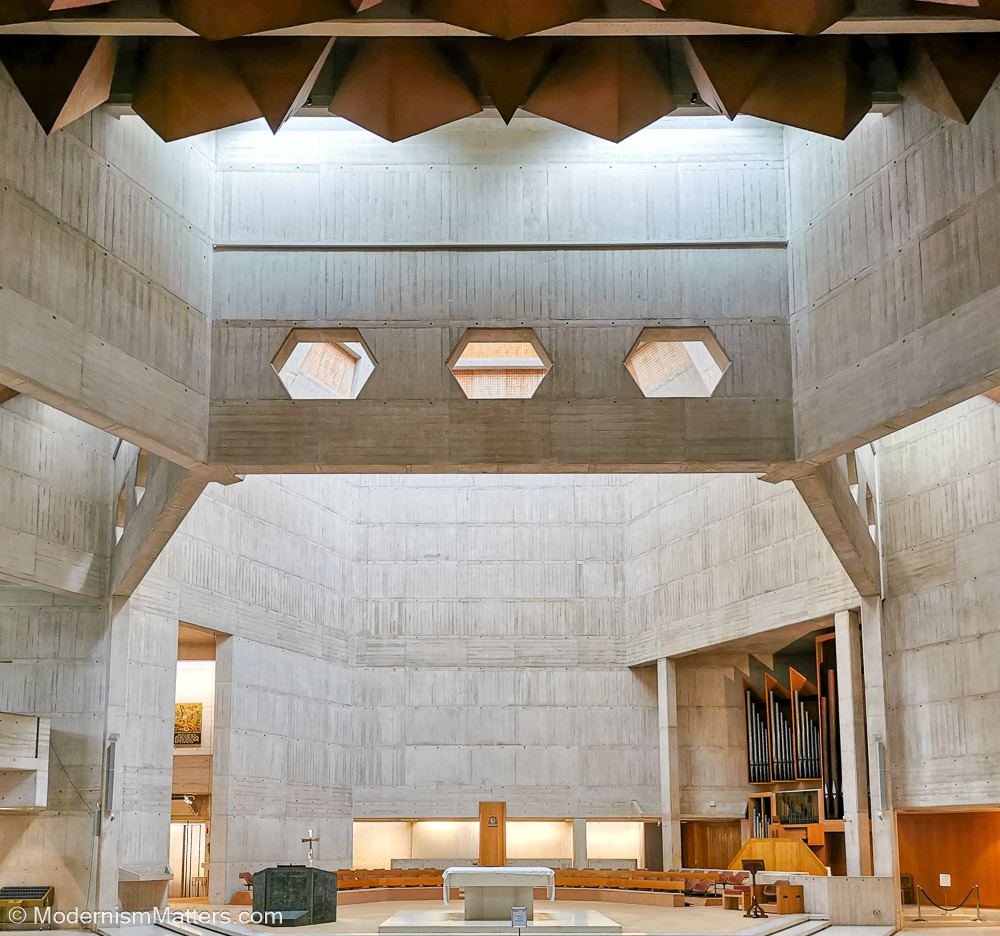
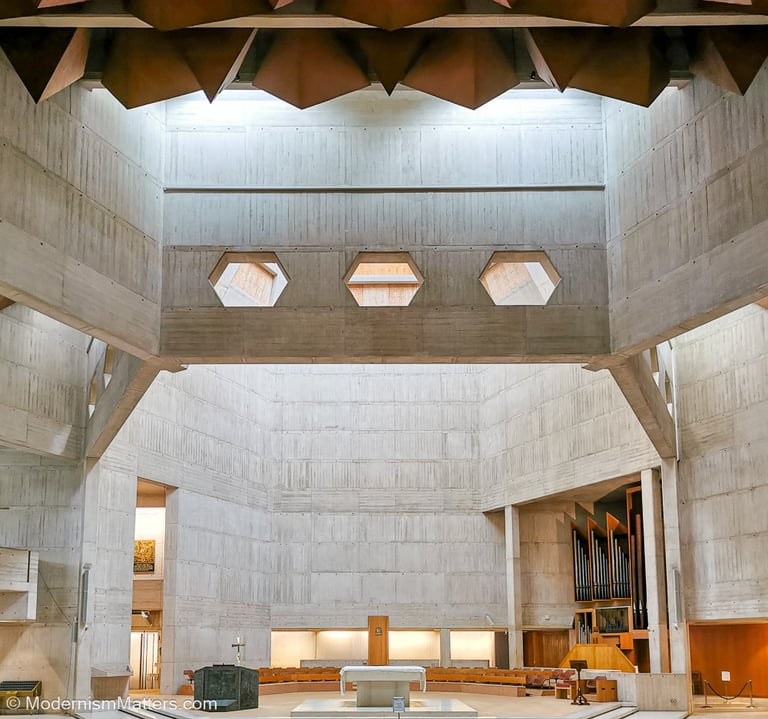
The whole assemblage is interset with pyramidal wooden baffles that help manage the acoustics in the nave and add some tonal warmth to the interior.
Clifton was the first cathedral to be designed in accordance with the liturgical reforms of the Second Vatican Council in the 1960s, which aimed to foster more communal and engaging services. As at Clifton, this was to be achieved by making a freestanding altar the centre point of the church, enabling worshippers to congregate around it, though a more literal ‘in-the-round’ effect was realised in Frederick Gibberd’s Liverpool Metropolitan Cathedral.
Directly above the altar, the soaring interior of Clifton Cathedral's lantern roof is an eye-catching mix of pale concrete and amber-toned composite inserts. It’s bathed with a natural white light that pours through skylights in the roof. At floor level, on the north side of the building, are two large colourful stained-glass walls, made from dalle de verre, designed by Henry Haig, a noted abstract glass artist. On the opposite side of the nave are a series of 14 illustrative ‘Stations of the Cross’ concrete panels, sculpted by William Mitchell.
In his authoritative gazetteer of Modern Buildings in Britain (2024), author Owen Hatherley describes Clifton Cathedral as “an astonishing work” and “the most important twentieth-century building in the South-West [of England]”. It's hard to disagree with such a sentiment. It’s a building whose Brutalist architectural charms reward with each visit and there are even times when, if there are no services taking place, visitors can experience its serene interior in often complete isolation.
Copyright ©2026 ModernismMatters.com. All Rights Reserved.