The SAS Royal Hotel: Marrying architecture and design in Copenhagen
The SAS Royal Hotel in Copenhagen (now the Radisson Collection Royal Hotel) was reputedly Denmark’s first skyscraper, and a radically modern addition to the then largely traditional cityscape of late 1950s Copenhagen.
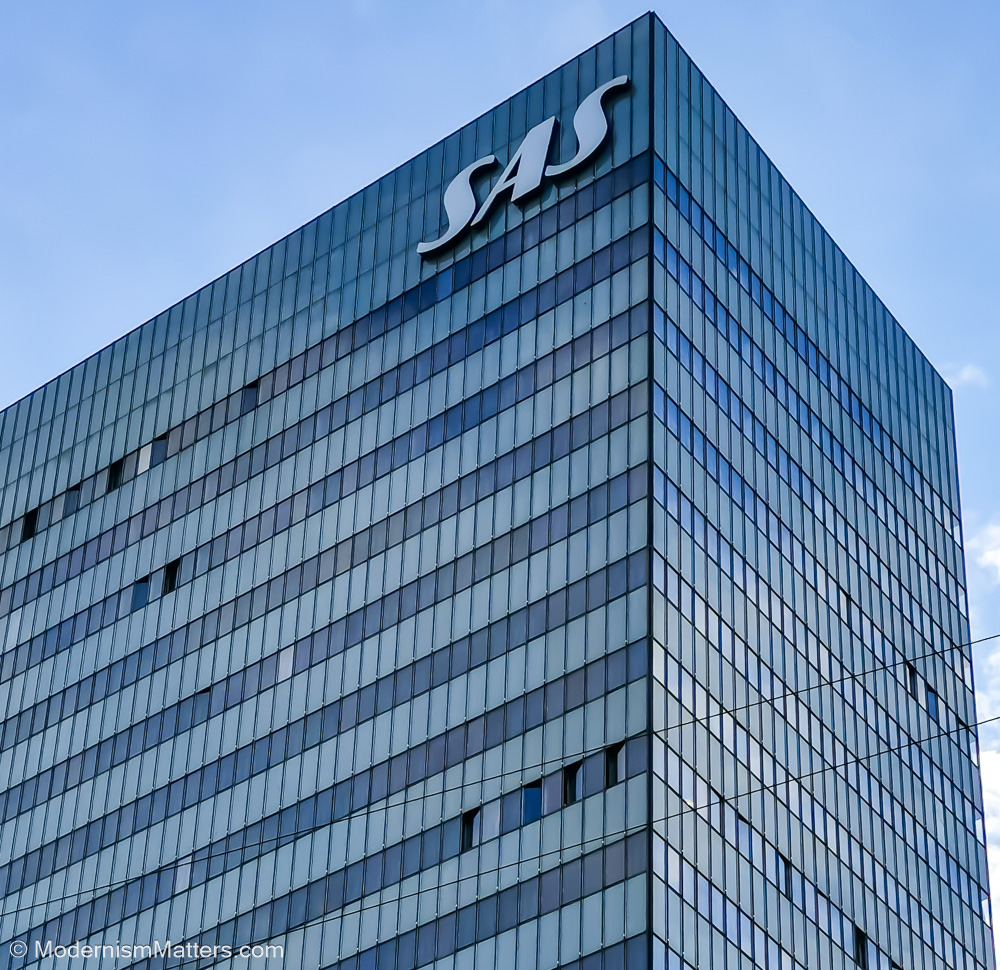
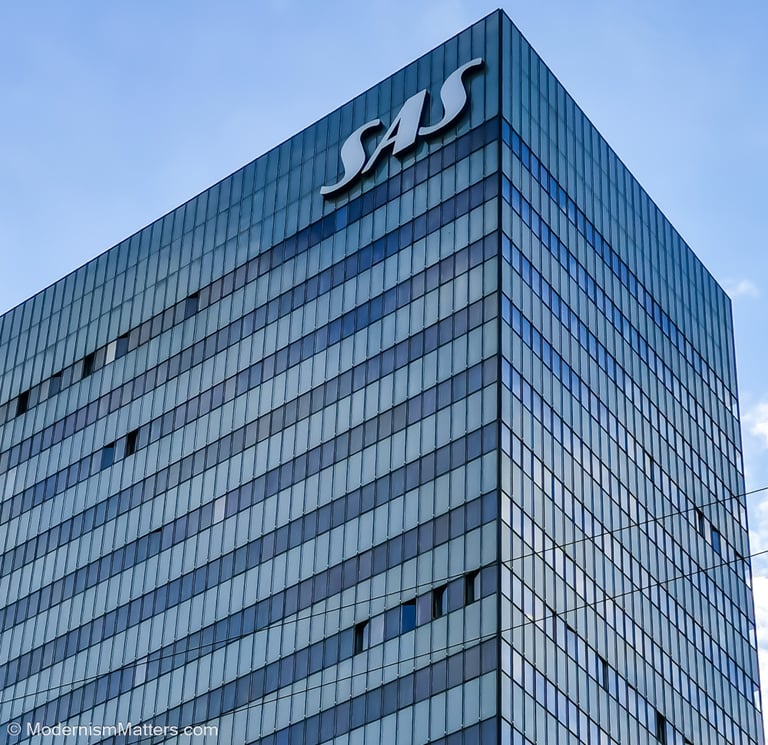
Completed and opened in 1960, the SAS Royal Hotel was designed by the pioneering exponent of Danish modernism, Arne Jacobsen. Like its Italian contemporary, Milan’s Pirelli Tower (1956-1958), designed by architect Gio Ponti, the building looked westward to America for its design influences and to the modernist skyscrapers proliferating in cities such as New York and Chicago. Indeed, with its slender 20-storey glass curtain wall tower positioned above a low-rise, two-storey rectangular podium – together forming an inverted offset ‘T’ shape – the SAS Royal Hotel bears a palpable resemblance to Skidmore, Owings and Merrill’s seminal Lever House in Manhattan (1950-1952), both in form and scale. However, whilst the SAS Royal Hotel was intended as a flagship building for Scandinavian Airlines System, with the company’s ‘SAS’ monogram prominently emblazoned in large lettering at the top of the hotel’s tower, it is no simple facsimile of mid-century American corporatism. Rather, the SAS Royal was conceived as a sleek, state-of-the-art establishment, functioning as a central hub for the airline’s growing base of international travellers whilst simultaneously serving as a beacon of Scandinavian modernity. To this end, the hotel was composed as a unified artistic whole – a ‘Gesamtkunstwerk’ – with Jacobsen overseeing the design of every facet, from the building’s overall structure and aesthetic, through to its fittings, furniture and textiles.
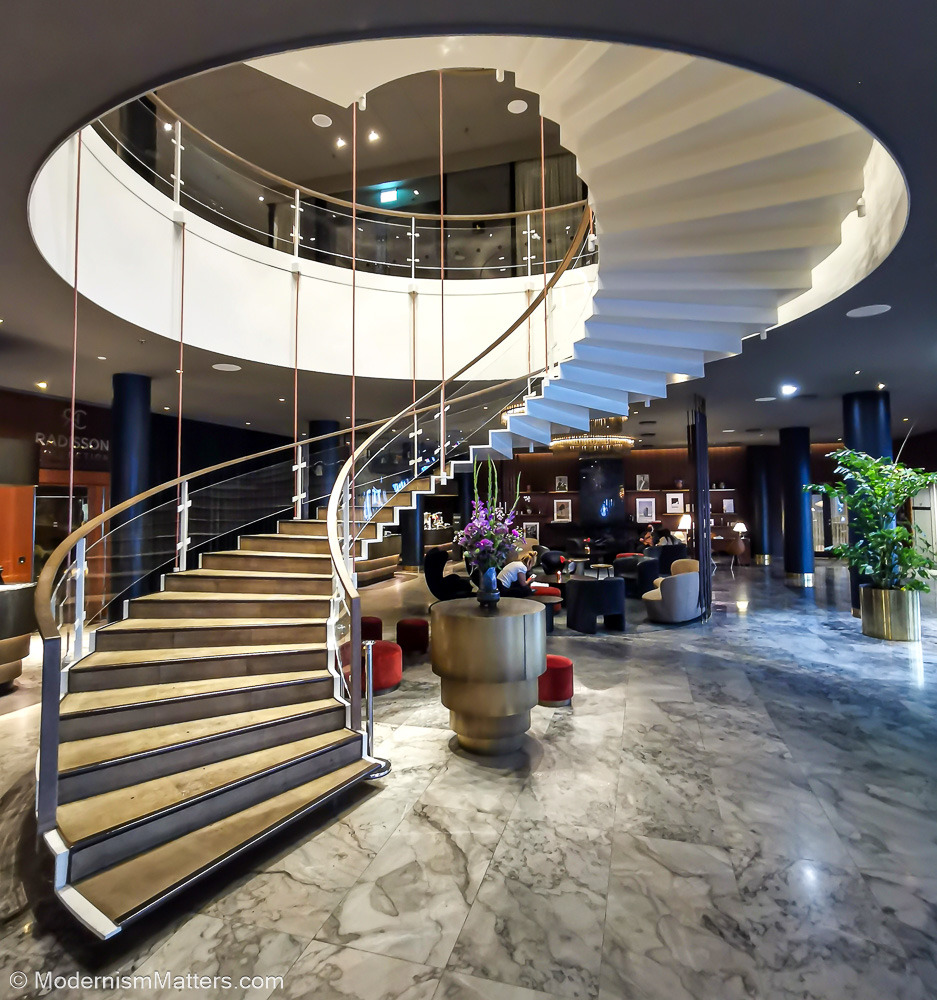
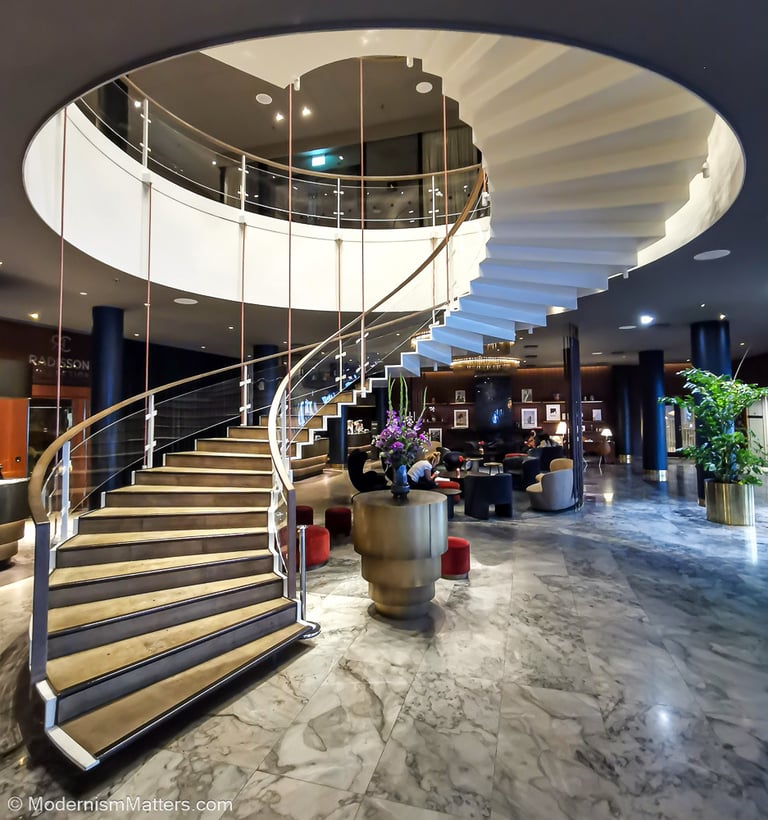
The exterior of the hotel’s tower is characterised by alternating bands of reflective blue glazing and grey-blue panelling, set in aluminium, that lend the building a distinctive, almost translucent quality; a sharp visual contrast is offered by the dark green colouration of the hotel’s lower two-storey podium section. Inside, the podium features an expansive lobby and lounge, the centrepiece of which is an elegant spiral staircase suspended from the floor above (see photo). Jacobsen famously created his now iconic sculptural Egg chair principally for the hotel’s lobby, as well as custom furniture for other parts of the building, including the Drop chair for the guest rooms and restaurant. Though the hotel has seen much modernisation over its lifetime, with significant alterations made to the original interiors, the staircase survived a 2018 remodelling of the lobby. Additionally, reproductions of Jacobsen’s chairs, along with other sympathetic mid-century-influenced design touches, have been re-introduced throughout the hotel. And, through all the decades of change, one room – Suite 606 – has been preserved with its authentic sixties décor, acting as a portal back to Jacobsen’s singular aesthetic vision.
Arne Jacobsen designed other notable buildings in Denmark’s capital city. Most prominent among these is the stark, monolithic Danish National Bank (1965-1978), which, like the SAS Royal Hotel, saw the architect detailing every aspect of the building. The National Bank’s blocky, oblong-shaped exterior, comprises a series of repeating dark-tinted vertical window modules on its longer sides, and hefty strips of grey marble cladding – separated by narrow slit windows – at either ends of the building. North of Copenhagen, in Klampenborg, Jacobsen also designed the celebrated Bellavista Estate (1932-1934) – a low-rise housing complex featuring the smooth white-washed exteriors, strong horizontal lines and curved balcony ends that are so redolent of 1930s Streamline Moderne architecture.
Copyright ©2026 ModernismMatters.com. All Rights Reserved.