
More than a mall: The Milton Keynes Shopping Building
Opened in 1979, 12 years after Milton Keynes’ designation as one of the last settlements of the post-war New Towns Act, the Shopping Building drew heavily on 1960s' urban planning and modernist design principles.
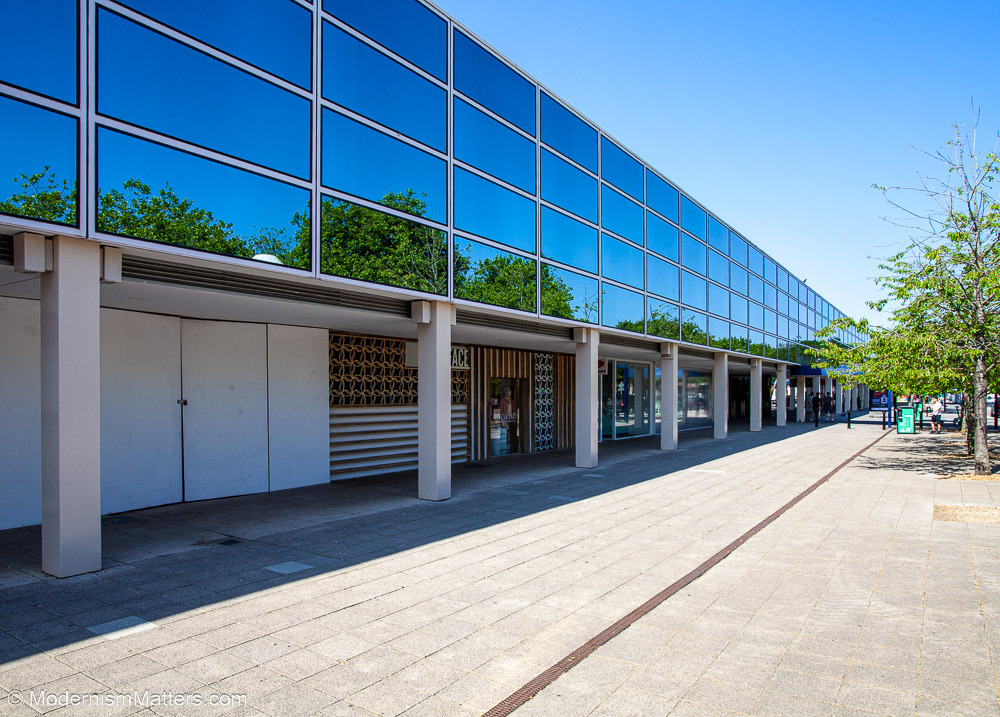
Akin to the centralised shopping malls incorporated into the urban fabric of many British New Towns of the era, including Runcorn and Cumbernauld, the Shopping Building was intended to serve as the civic and economic heart of Milton Keynes. Described by Historic England as an indoor 'high street', the now 720-metre-long megastructure features twin interconnected pedestrian arcades that run parallel along the majority of its length. Functionally, the Shopping Building drew obvious inspiration from its historical predecessors, not least (reputedly) the Galleria Vittorio Emanuele II shopping arcade (1865-1877), which dominates the central commercial area of Milan, Italy. Yet Milton Keynes’ iteration – designed by architects from the town's Development Corporation – was also resolutely modern, in both spirit and form. With its pared-back, steel-framed and mirror-glass-clad design, the Shopping Building unabashedly embodied the minimalist, less is more, aesthetic of one of the titans of mid-twentieth century modernist architecture, Ludwig Mies van der Rohe.
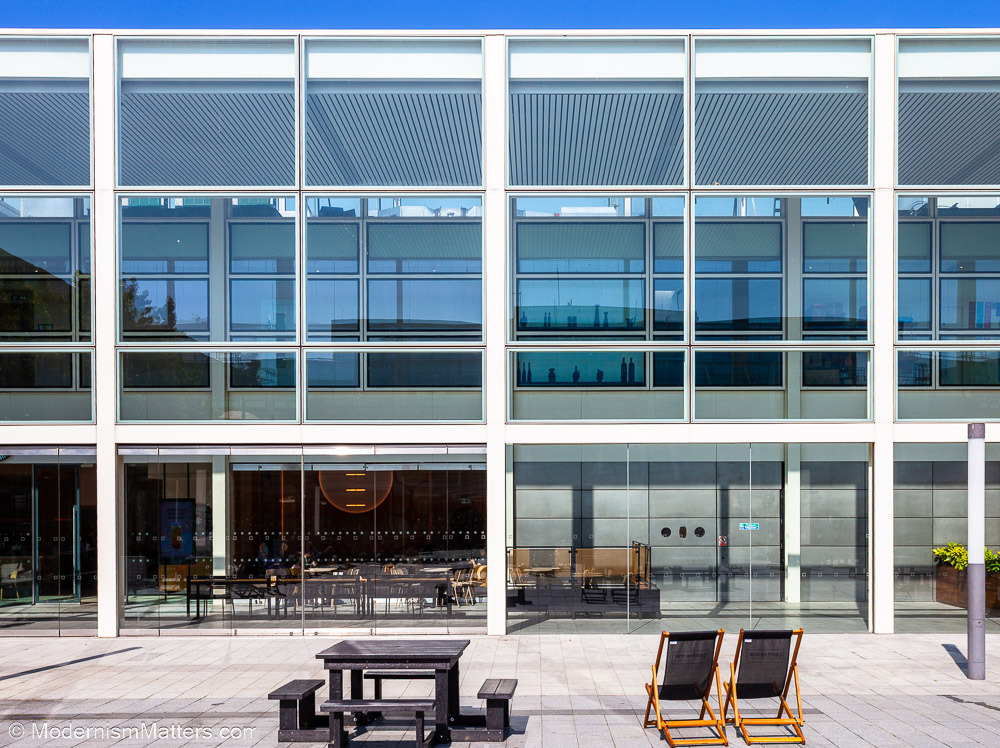
‘Miesian’ influences are also reflected in the building’s strong rectilinearity and exposed, high-precision, structural framework – arranged in a repeating grid pattern – which befits Milton Keynes and its signature gridded road network.
The overall effect is to create a building with a long, open-plan layout. It is all clean lines and angles, incorporating a continuous band of clerestory glazing which, in combination with the building’s neutral colour palette and elegant travertine flooring, allows for a bright, airy and refined interior. The Shopping Building’s single-storey design and ground-level walkways, featuring dozens of large planter beds containing both small trees and a mix of exotic and other plants, add to the ‘outside-in’ feeling of the building and palpable sense of easy accessibility. It’s a harmonious visitor experience, the antithesis of that offered by many modern shopping malls, with their reliance on artificial lighting, escalator-dependent multiple floors, and general aura of confinement.
A separate extension to the Shopping Building, Midsummer Place, was opened in 2000, coinciding with the original complex’s rebranding as ‘Centre:MK’. In 2010, the Shopping Building’s architectural merit was formally recognised in its Grade II listing, and even now, after nearly 50 years of operation, the building remains a cornerstone of Milton Keynes’ high-performing retail economy.
Copyright ©2026 ModernismMatters.com. All Rights Reserved.